
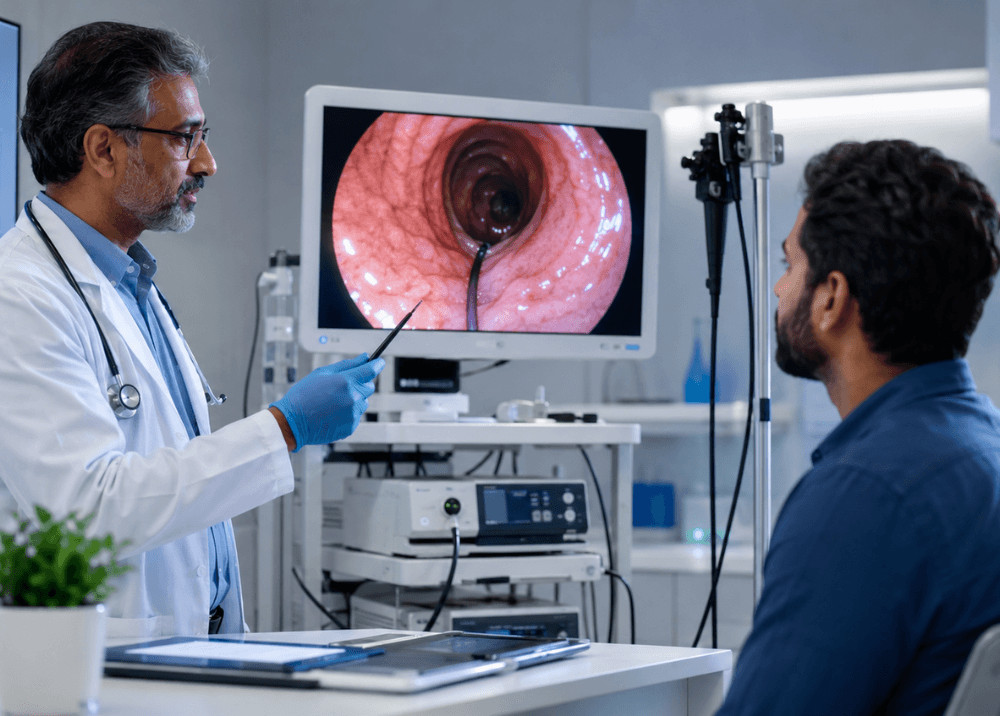
Many individuals feel a wave of anxiety when a doctor mentions the word ‘endoscopy’. It is often misunderstood as a painful, extreme measure reserved only for critical situations. Because of this, many patients delay getting the test done, choosing instead to tolerate chronic stomach pain, severe bloating, or recurring acidity for years.
Dr. Wahid Akbar, an advanced endoscopy specialist in Kashmir, notes that putting off a necessary evaluation often allows a manageable digestive issue to progress into a much more complex condition. Understanding what happens during an endoscopy and why it is such a powerful tool can completely change how you view your digestive health.
What is an Endoscopy?
An endoscopy is a medical procedure where a specialist uses an endoscope – a thin, flexible tube equipped with a high-definition camera and a light at its tip – to look directly inside your digestive tract.
Unlike external scans like X-rays or ultrasounds, an endoscopy allows the doctor to see the exact texture, color, and health of your internal tissue in real-time. Depending on which part of the digestive tract needs evaluation, it generally falls into two primary forms:
Upper GI Endoscopy: Looking at the esophagus (food pipe), stomach, and duodenum (the first part of the small intestine) through the mouth.
Colonoscopy: Examining the entire length of the large intestine (colon) and rectum through the lower tract
What Is Endoscopy Used For?
An endoscopy does not just look for problems; very often, it fixes them at the exact same time. This is why gastroenterologists divide the procedure into two main types:
Diagnostic Endoscopy & Colonoscopy is purely investigative. It is used to discover the biological root cause of your symptoms. Examples include:
- Checking for inflammation (gastritis) or deep sores (ulcers) in the stomach lining.
- Taking small tissue samples (biopsies & polyps’ removal) to test for infections like H. pylori or early signs of cellular changes.
- Screening the colon for early signs of inflammatory bowel disease (IBD) or polyps.
Therapeutic Endoscopy & Colonoscopy goes beyond investigation. It allows the specialist to actively treat a condition right then and there, often saving patients from undergoing major, open surgeries. Advanced examples include:
- GI Bleed Management & Stenting: Endoscopy can instantly stop severe internal bleeding and place stents to open blocked tracts.
- Stones & Tumour Management: Clearing blockages in the bile ducts or removing early-stage tumors from the digestive wall.
Advanced Techniques: Utilizing highly specialized modalities like ERCP & EUS to visualize and treat deep internal organs like the pancreas, gallbladder, and liver.
When Do Gastroenterologists Recommend an Endoscopy?
Your doctor will generally advise an endoscopy if you are experiencing persistent, unexplained symptoms that fail to respond to standard lifestyle changes or short courses of medication.
When It’s Time to Look Deeper:
- Chronic, severe heartburn or acid reflux (GERD)
- Unexplained difficulty or pain while swallowing food
- Persistent vomiting or vomiting blood
- Unintentional, rapid weight loss paired with loss of appetite
- Chronic diarrhea, severe constipation, or blood or mucus in the stool
- Unexplained iron-deficiency anemia (which often points to hidden internal blood loss)
Advanced Endoscopic Procedures Available
As an Advanced Endoscopy Specialist in Srinagar, Dr. Wahid Akbar performs a wide range of specialized procedures for complex gastrointestinal and hepatobiliary disorders.
In addition to diagnostic and therapeutic endoscopy and colonoscopy, he expertly performs:
GI Bleed Management & Stenting
Endoscopy is often lifesaving in patients with gastrointestinal bleeding. These specialized procedures allow:
- Identification of bleeding sources
- Immediate bleeding control
- Placement of stents for obstructed digestive passages
- Relief of symptoms caused by narrowing or tumors
Biopsies & Polyps Removal
Endoscopy enables doctors to obtain tissue samples for microscopic examination.
Procedures include:
- Early cancer detection
- Evaluation of chronic inflammation
- Diagnosis of infections and autoimmune disorders
Removing polyps early significantly reduces the risk of colorectal cancer.
Stones & Tumour Management
Advanced endoscopic techniques allow minimally invasive treatment of:
- Common bile duct stones
- Pancreatic disorders
- Digestive tract tumors
- Obstructive jaundice
- Certain precancerous conditions
Many of these treatments can be performed without open surgery.
As a dedicated specialist in stones and tumor management, Dr. Wahid Akbar utilizes advanced therapeutic endoscopy techniques to offer highly precise, minimally invasive treatment for complex gastrointestinal conditions.

“Endoscopy allows us to see beyond symptoms and identify the exact cause of disease. Modern therapeutic endoscopy not only diagnoses conditions early but often enables treatment during the same procedure, improving patient outcomes while minimizing recovery time.”
Is Endoscopy Painful?
One of the biggest misconceptions about endoscopy is that it is painful.
In reality, most endoscopic procedures are well tolerated. Sedation or anesthesia is commonly used to maximize comfort and reduce anxiety.
Patients generally experience:
- Minimal discomfort
- Little to no pain during the procedure
- Short recovery periods
- Same-day discharge in many cases
Most patients report that the procedure was much easier than they anticipated.
Visit Dr. Wahid Akbar Gastro and Liver Superspeciality Clinic
Consult Dr. Wahid Akbar, Consultant Gastroenterologist, Hepatologist & Advanced Endoscopy Specialist, for expert evaluation and management of digestive and liver diseases.
Book Appointment Now: +91 84929 00770
Address: Amandeep BR Medicity, Tangpora Bypass, Srinagar, Jammu & Kashmir – 190010
Website: https://drwahidakbarbestgastrodoc.com/
Google Profile: Dr. Wahid Akbar – Best Gastroenterologist in Srinagar | Advanced Endoscopy Expert
Serving Patients At:
- Srinagar Kashmir: Dr Wahid Gastro & Liver Superspeciality Clinic Nowgam Chowk Srinagar
- Outreach: Medlife Clinic Shopian & Alhikmah Healthcare Sopore.